 |
A TV similar to the one Grandma had
© Flickriver user roadsidepictues
http://farm6.staticflickr.com/5257/5522157344_94f4a55707_b.jpg
|
My grandparents did not get their first television until the 1950's, after they had been married for a few years. They bought it new, and it was black and white, and "not too big." It sat in their living room, but they did not get many channels. Grandma remembers getting two channels, channel eight from Columbia and channel six out of Sedalia. These stations mainly aired educational programs, kids shows, and cooking shows. She remembers one program in particular, Miss Francis, which was hosted by a woman who would teach children's lessons. Even though they did not have a lot of choice in programming, Grandma says, "we watched what we could." Channel six was so local that several local residents got their opportunity for "fame." During the interview, Grandma told the story of my uncle's small screen debut at the age of seven. His first grade class got to take a trip to the station and be on TV. Their teacher mainly just asked them questions about school, but of course this was must-see entertainment.
When Grandma and Grandpa got their first TV, they did not watch it much because there was not a lot on, so it did not have a very big impact on their home life. In addition, they were typically busy throughout the day so they did not have the opportunity to watch it all the time. They mainly watched TV at night, aside from some daytime soap operas. Of course, the stations would go off the air at a certain time at night, but they were likely in bed by that time anyway.
When I asked how TV changed her home life, Grandma focused on how she got the news. She and her family were now exposed to more world news, so they felt more connected. They were able to hear, and now see, more than what they read in the newspaper or heard on the radio. Later, she commented on the development of news programs, saying, "They're so much different. They show more of everything, all the violence. The anchors tell it like it is. They have people out on the street to catch everything on camera. They're right on top of it." News reporting has come a long way since the days of Walter Cronkite. Now, instead of one person giving all the news, each station has its own team of reporters and anchors that specialize on topics and give coverage to local and national news. She commented on the ability of news stations to give more up-to-date news, so now we can learn about events as they are happening.
Like most people, Grandma remembers watching news coverage of the Kennedy assassination and the moon landing on TV. When President Kennedy died, she said, "it was a sad day for everybody." This illustrates a point that Grandma alluded to, that TV connects people by allowing them to experience the same things at the same time. When TV became popular, she said, "everyone got one because it was what you had to have." Once people saw their family and friends with TVs, they knew they needed one for themselves, or they would be missing out.
Later, when Grandma and Grandpa got more channels, they were able to watch national favorites like I Love Lucy, Gunsmoke, The Dick Van Dyke Show, The Andy Griffith Show, and more. Grandma referred to these as "good clean programs, not like there are today." In addition, she could watch more cooking shows, as well as soap operas, both of which she still watches today.
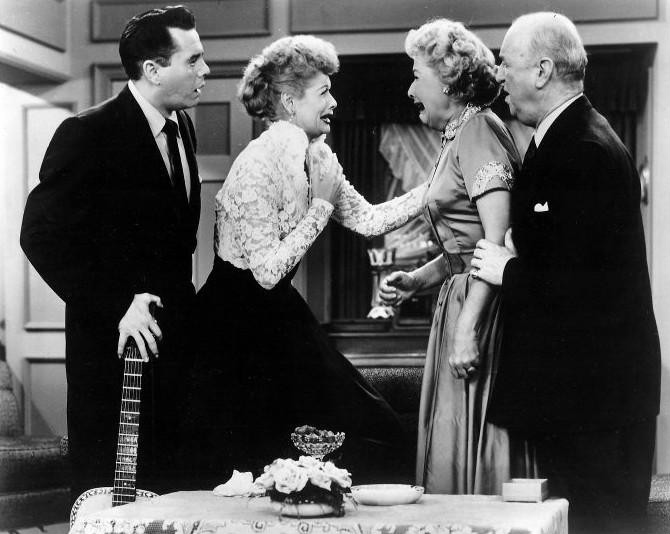 |
An episode of I Love Lucy from 1955
https://upload.wikimedia.org/wikipedia/commons/e/e5/I_Love_Lucy_1955.JPG
|
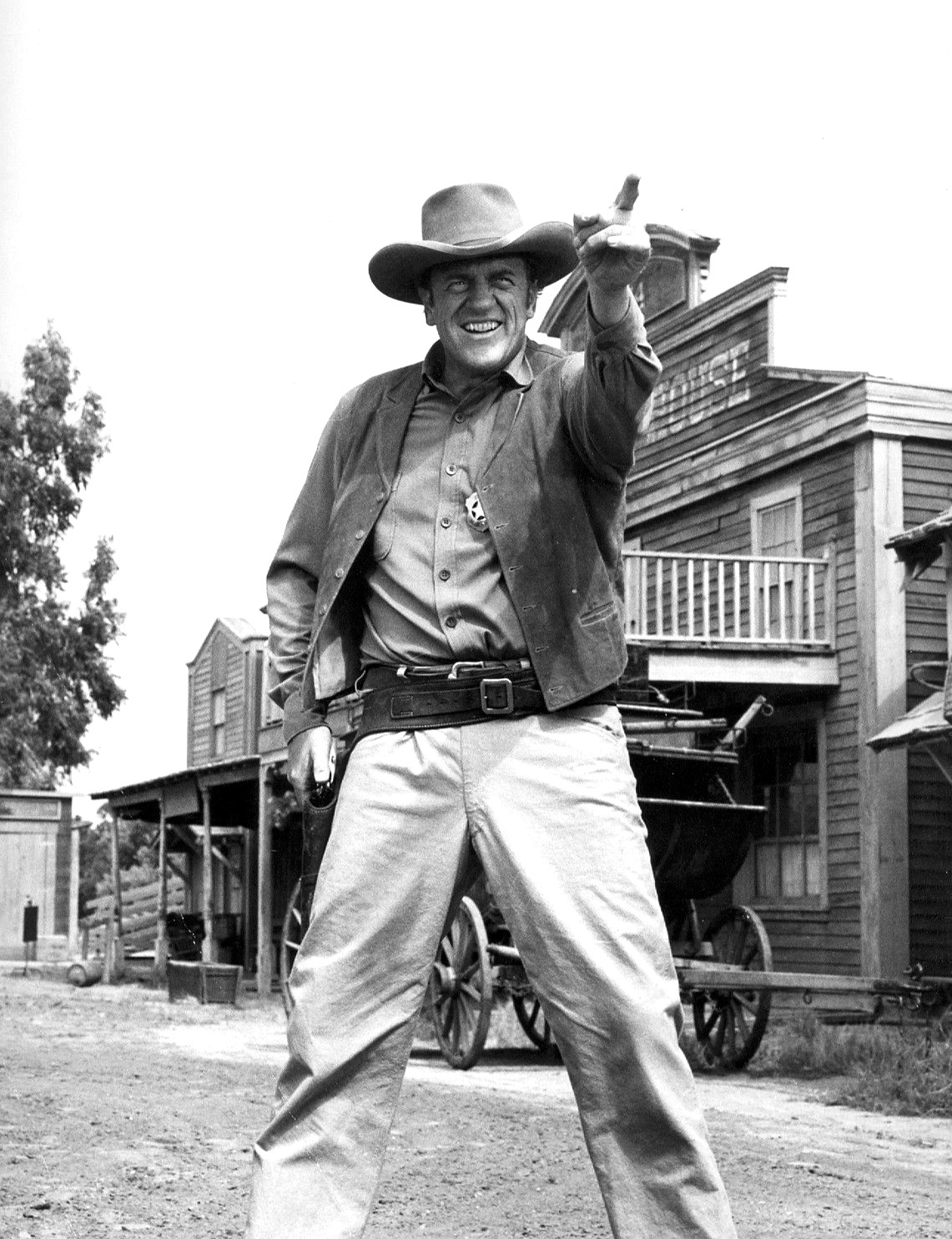 |
James Arness as Matt Dillon, Gunsmoke, 1974
https://upload.wikimedia.org/wikipedia/commons/b/b6/James_Arness_Gunsmoke_1974.JPG
|
With this being the last interview, I would like to reflect a little on this experience. This interview project has been the most enjoyable assignment of my semester. I really appreciate having had this opportunity to not only learn about media from my grandma, but to learn about her life and experiences as well. I know that she enjoyed sharing her stories with me, and I am glad that I got the opportunity to listen. What I learned in these interviews will hopefully make me more conscious of how media is changing, and how it affects my life. Media is an essential part of life, and knowing how it has evolved makes us better consumers today. Media is ever changing, but one thing is certain; it is here to stay. The great CBS news anchor Walter Cronkite used to sign off each of his nightly broadcasts with the quote "And that's the way it is," referring to the news stories of the night. As I "sign off" this blog, I hope that I have succeeded in treating the subject of media the same way that he treated his broadcasts, with respect for the source and with the faith of proper reporting. Now, I say, in regards to media, that's the way it was, but not necessarily how it will stay.

No comments:
Post a Comment